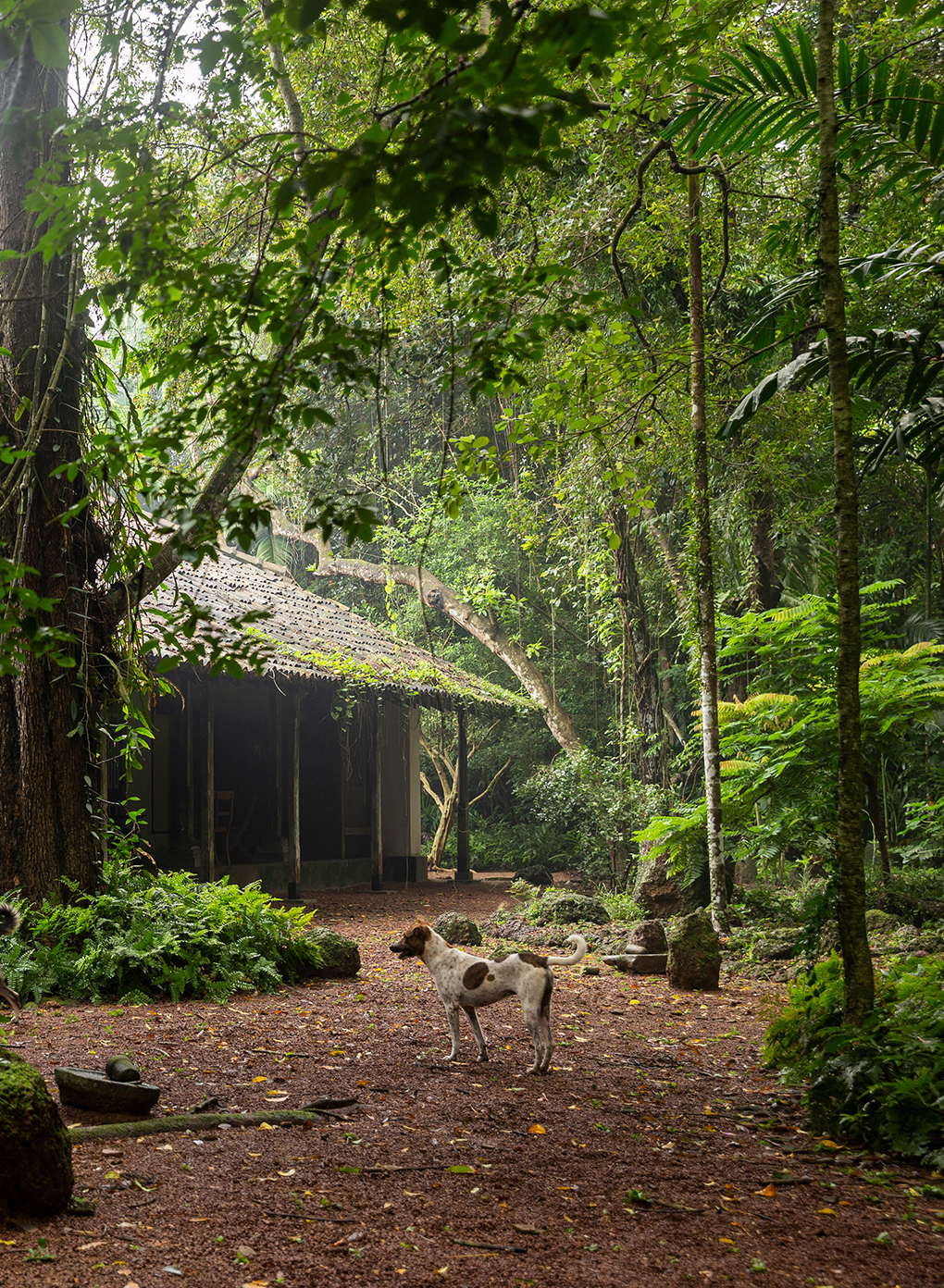
Kadadasi wasn't founded in a boardroom. It grew, literally, out of forty years of patience in a village backyard in Bollatha.
Around forty years ago, architect Vijitha Basnayaka began gradually greening the family's ancestral land, about seven acres in all, growing a two-acre forest with an organic permaculture backyard flourishing around it. He believed that "architecture and nature should have a very close affinity, that the closer we are to nature, the less complicated our lifestyles will be."
What was once bare land became a lush forest of high biodiversity, peace and tranquillity, with waterways, birdlife, and one very shaded little workshop.
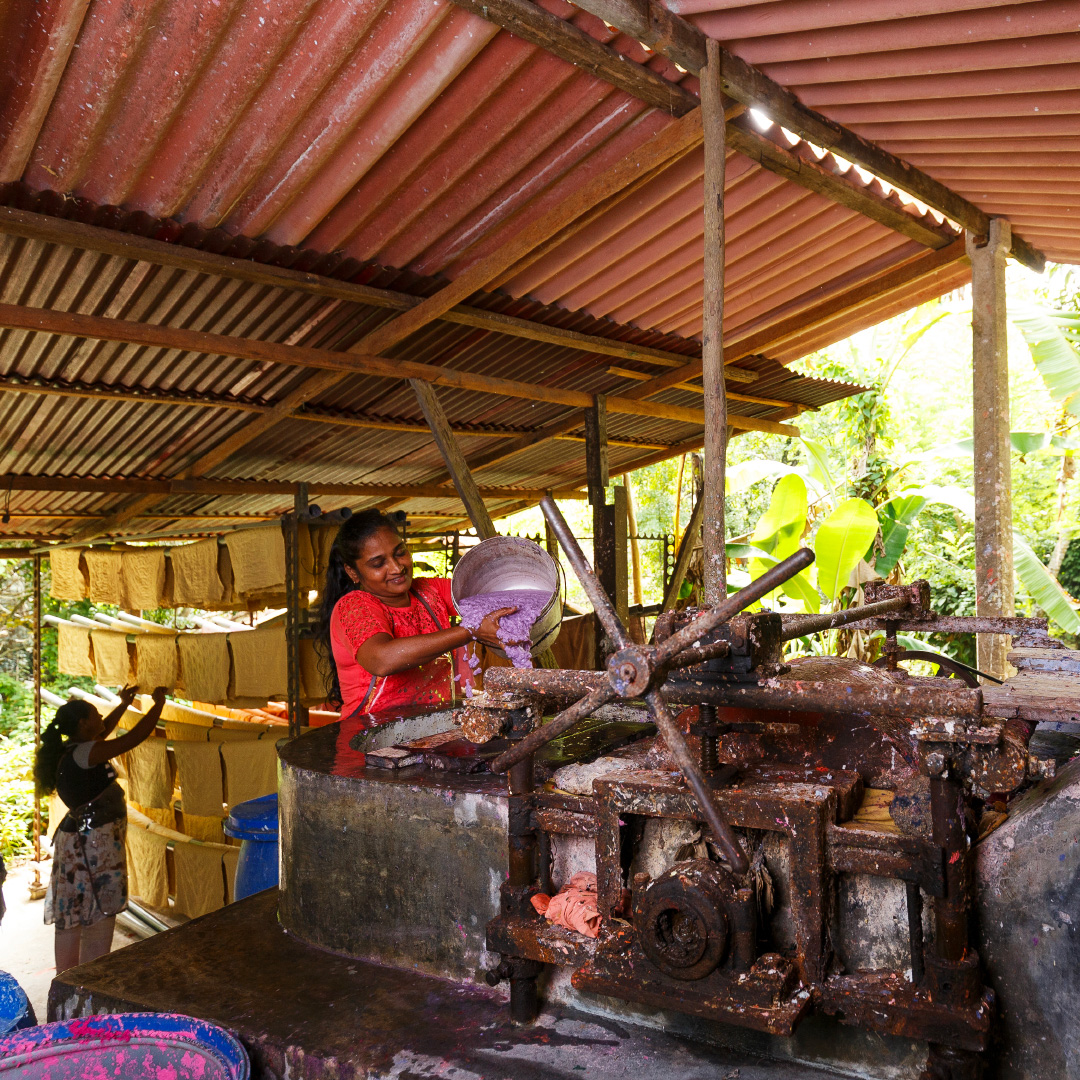
Vijitha's wife Ira, naturalist, homemaker and birder, watched industrialisation creep into the village, and with it, the waste. Instead of looking away, she travelled to India to learn the craft of handmade recycled paper.
Back home, she set up a small papermaking workshop in her backyard, blending materials from the forest with reclaimed industrial waste to create textured, uniquely designed papers. Then she did something bigger: she began training the women of the village.
waste in. wonder out. ~
The next generation takes root. Young artisans bring new ideas to the craft while honoring the forest tradition that began with their parents and grandparents.
Kadadasi partners with villagers to plant trees, establish reuse programs, and teach recycling. The forest grows—and so does the community's investment in it.
Experience the backyard forest firsthand. Forest walks, homestays, birdwatching, and immersive forest experiences connect people to the land that inspires every sheet of paper.
Village women run the craft, invent new textures, and sign them with their own names. The forest keeps growing.
An environmentally sustainable enterprise with a deliberately tiny footprint:
No high electricity consumption, pulp is beaten and pressed by hand-powered machines.
The workshop is naturally lit and ventilated, designed by an architect who grew the shade himself.
Non-toxic wastewater is recycled into a permaculture backyard beside the workshop.
Unlike conventional papermaking, no tree is ever felled, the forest is the point, not the resource.